
03/04/2026, València.
Yesterday, Thursday, a group of activists from MOC-València staged a protest outside CaixaBank’s headquarters. They condemned the bank’s investments in arms companies and its funding of illegal settlements in the occupied Palestinian territories.
CaixaBank’s shareholders’ meeting took place seven days ago. At this meeting, they approved a supplementary dividend for shareholders of €2.32 billion, bringing the bank’s total annual payout to €3.5 billion. According to the bank’s CEO, “2025 has been a great year for CaixaBank”. The bank posted a net profit of €5.891 billion, 1.8% higher than in 2024. Its commercial and investment activities enabled it to increase its turnover by 6.9% to €1.1 trillion.
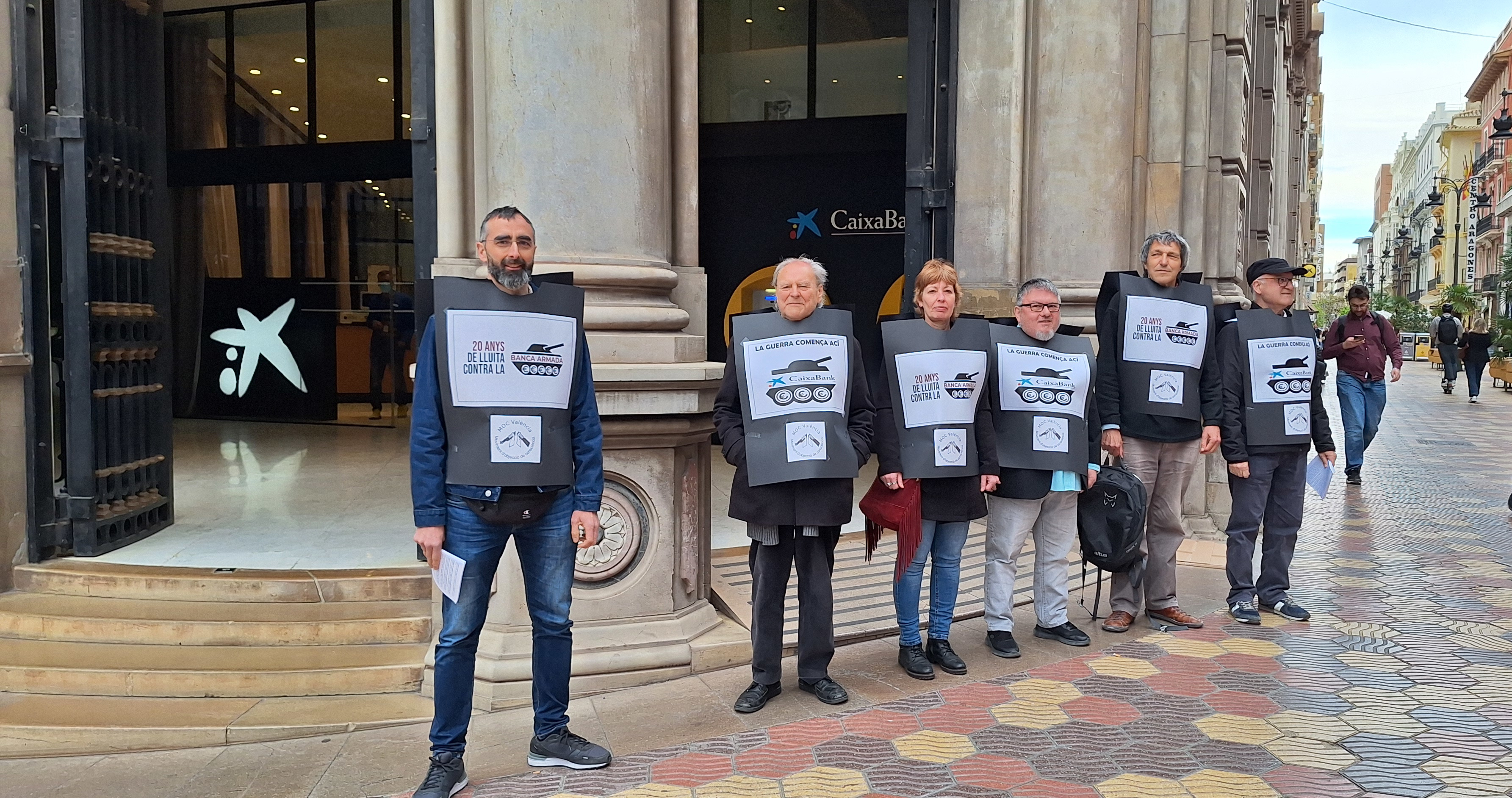
However, as the protesters have pointed out, a significant portion of these profits is tainted with blood: they stem from CaixaBank’s investments in arms companies, both Spanish and international. Some of these companies, which received funding between 2022 and 2024, include Boeing, Indra, Navantia, EME, Aernova and Sidenor.
CaixaBank ranks third among Spanish banks that profit most from the business of war and genocide, behind Banco Santander and BBVA, and ranks 91st globally.
With regard to the financing of arms manufacturers that have sold weapons to Israel, a study published in 2024 by the Centre Delàs(1) revealed that between 2022 and 2024, CaixaBank provided Boeing with at least $110 million in financing. This company is responsible for manufacturing aircraft, bombs, missiles and other weapons and ammunition that have been – and continue to be – exported to Israel, and which Israel uses against the civilian population in attacks that are being investigated as war crimes and crimes of genocide by the International Court of Justice and the International Criminal Court.
Furthermore, the report by the ‘Don’t buy into occupation’ coalition states that the Spanish financial institution has granted loans and underwritten transactions for companies operating from illegal settlements in the Occupied Palestinian Territories, amounting to $3.371 billion between 2023 and 2025. And, in 2025, it held investments in bonds and shares of these companies worth at least $2.808 billion. The data gathered in the investigation suggests that CaixaBank has financed and continues to finance companies linked to the occupation and genocide to the tune of over $6 billion.
Why do banks invest in weapons?
Because it is a secure business with high profitability. Let us remember that the clients of arms manufacturers are governments, and that the growing escalation of conflict, along with rearmament programmes and increased military spending, promise them substantial profits and a promising future. It is hardly surprising that these companies and the banks form a very powerful lobby to promote programmes such as the European Rearmament Programme.
 |
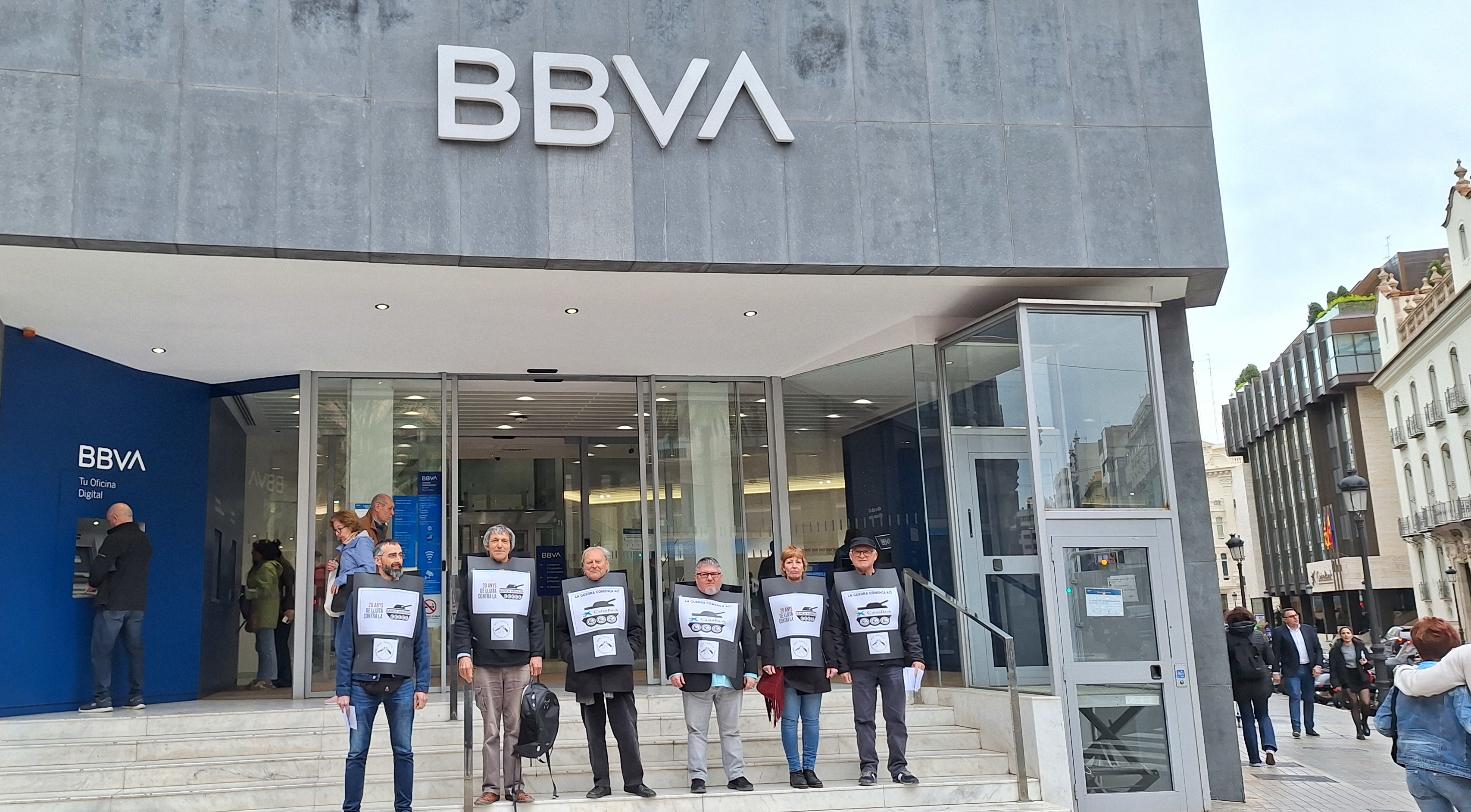 |
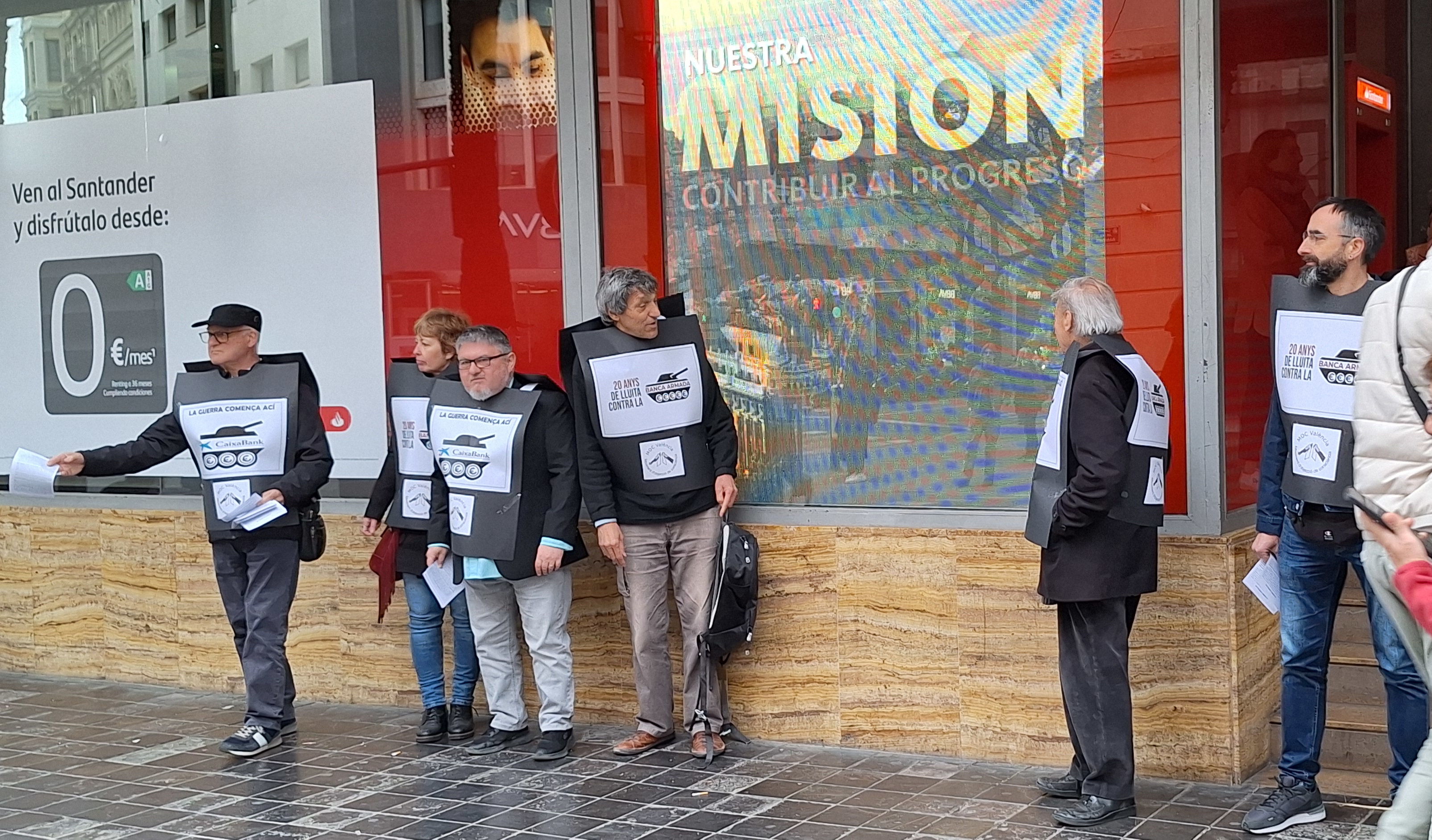
Activists, displaying posters from the “No to Arms-Dealing Banks” campaign, have urged customers of CaixaBank and other banks that invest in the arms industry – such as Banco Santander and BBVA – to withdraw their savings, pay packets and current accounts from these institutions, and to seek out savings banks and financial institutions that do not fuel wars. They also pointed out that only civilised civil society, rising above political and financial interests, can stop wars and make a world of peace, justice, equality and freedom possible.
Video of yesterday's action:

---
(1) Report 71 by the Centre Delàs for Peace Studies: The banking industry’s role in global warmongering. 2025 Ranking of the arms-financing banking sector. Jordi Calvo and Max Carbonell. Barcelona, March 2024.